Requirements, configuration, testing and estimation usually live in separate tools and separate spreadsheets that never talk to each other. Here they read from the same Oracle taxonomy and hand off to each other automatically.
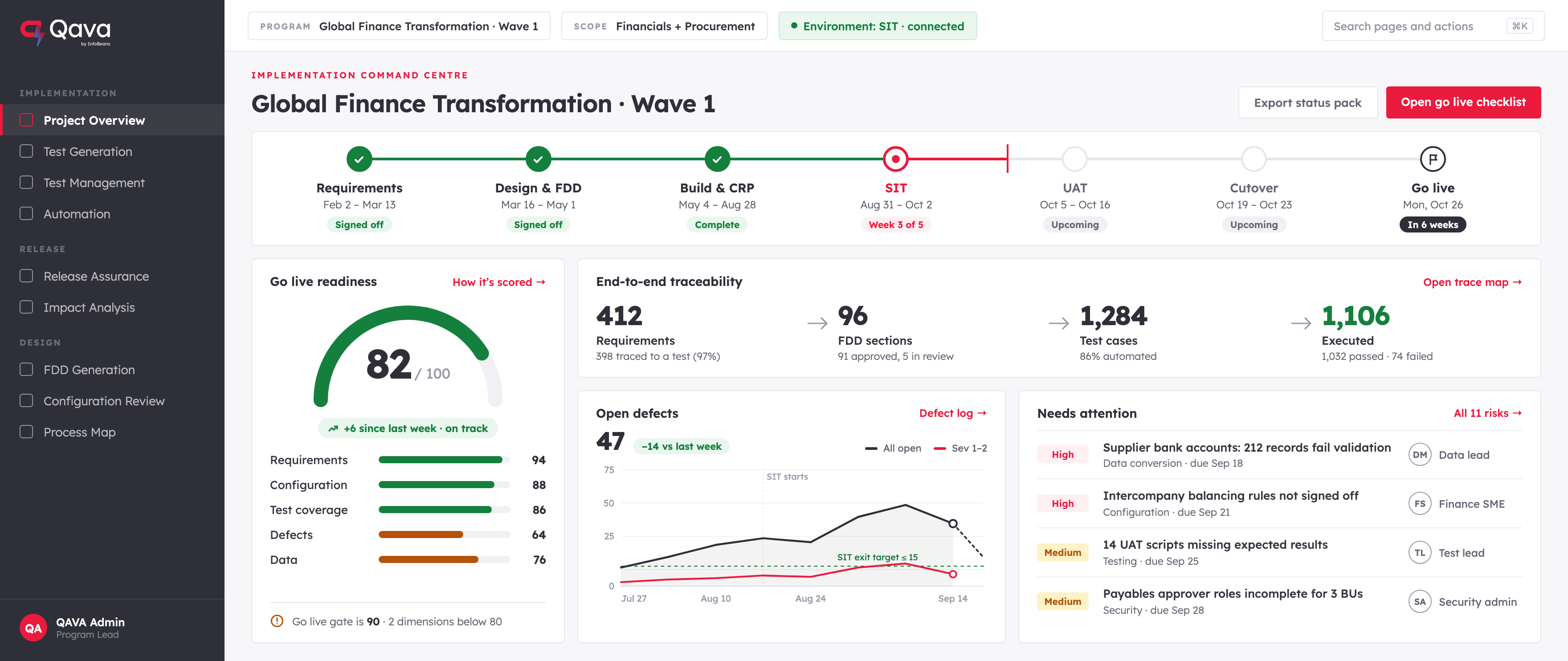
Each stage hands its output to the next. Pick a stage to see what the platform does there.
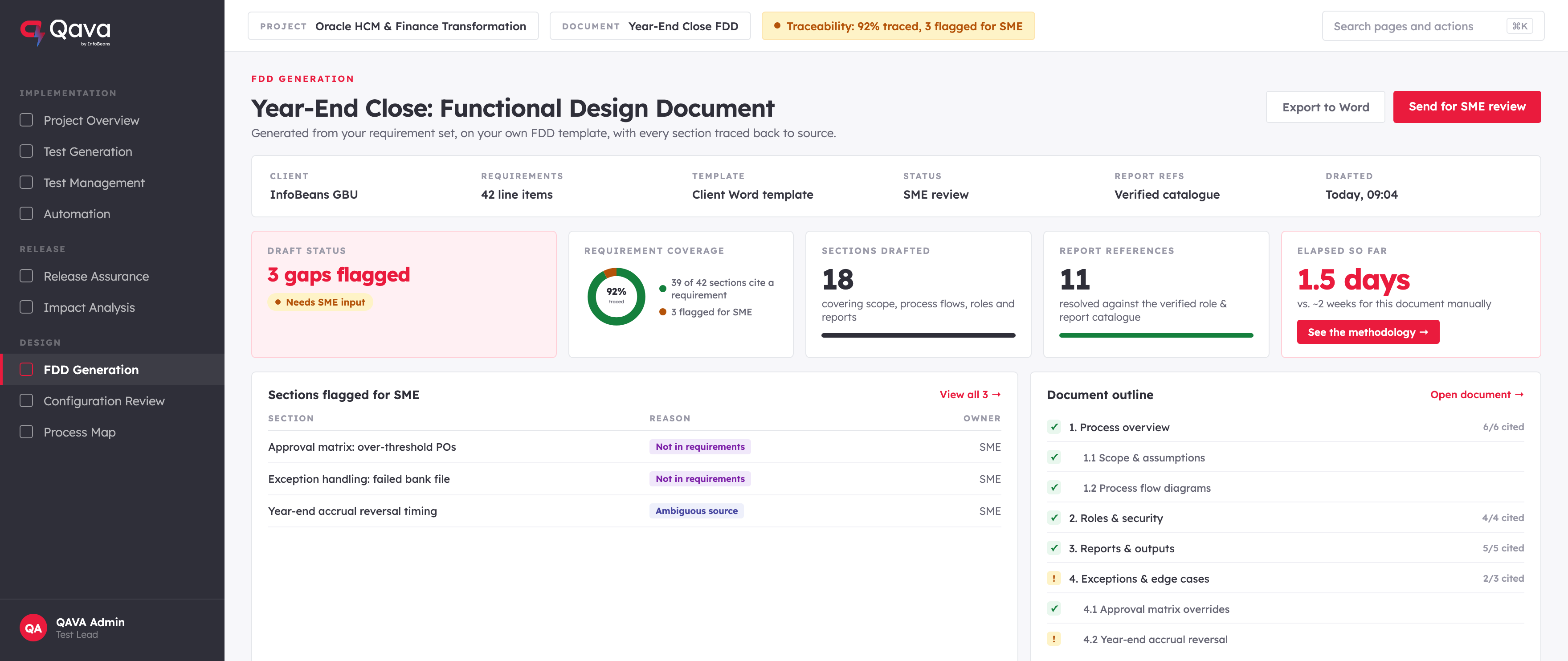
Every section of the generated FDD traces back to the requirement that produced it, on your own document templates. Your SME reviews it line by line instead of drafting from a blank page.

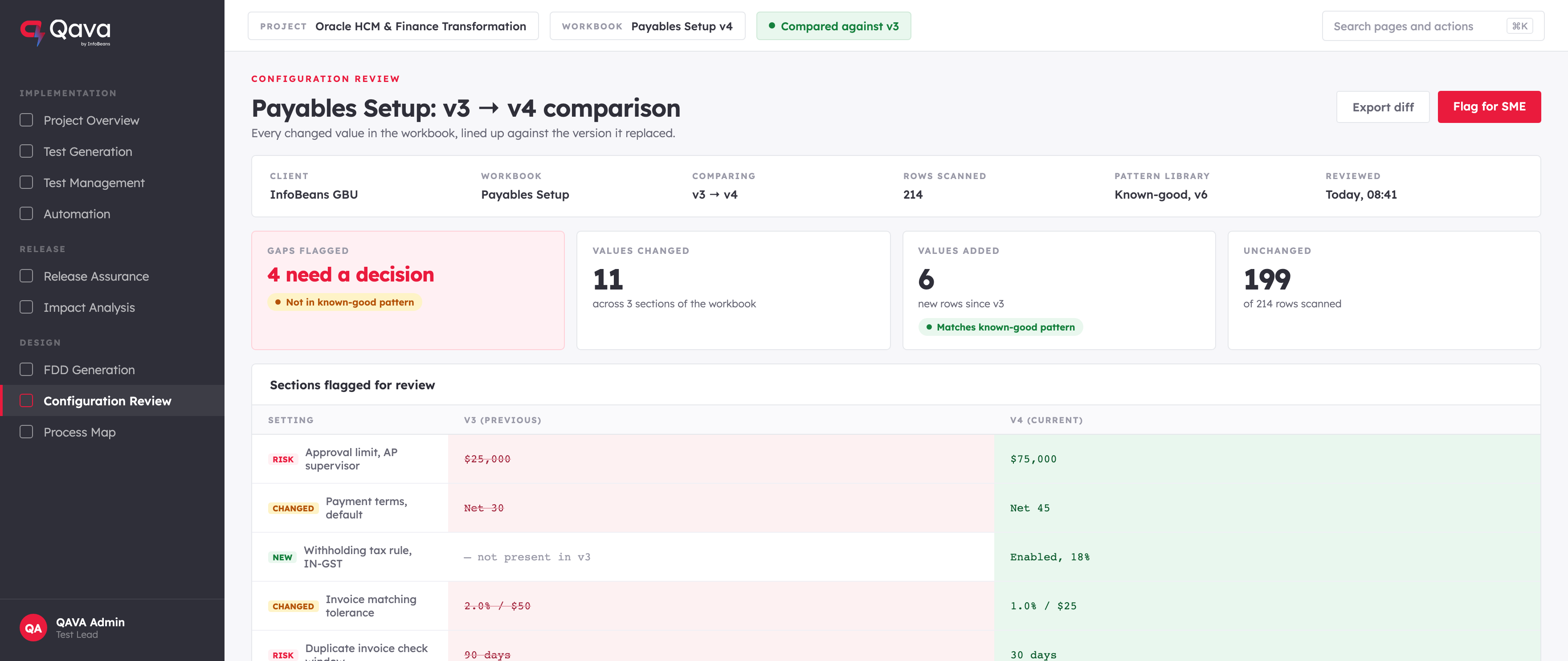
An agent reviews your Fusion configuration workbook against known good patterns and flags gaps before that configuration ever reaches a test script. It is not connected to a live DEV, TEST or PROD tenant. It reviews and diffs the workbooks you give it, one version against the next.

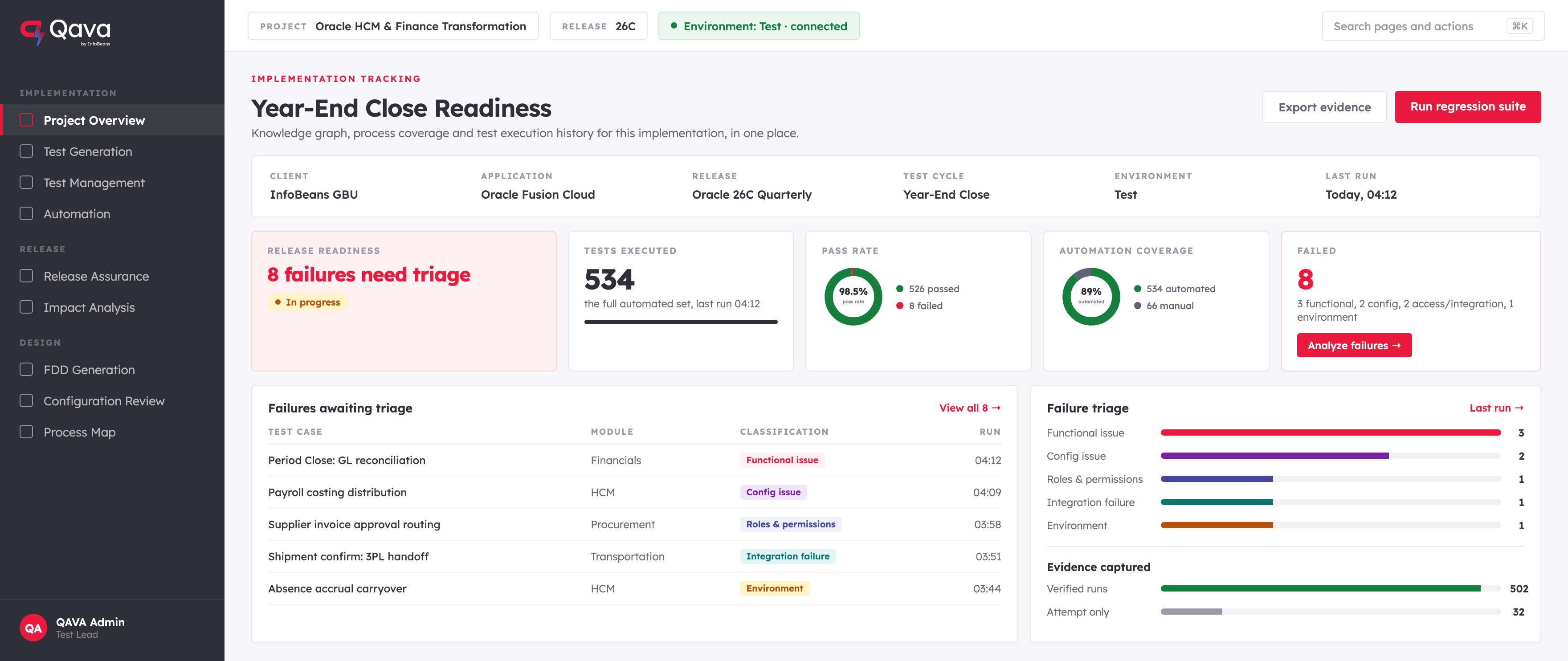
Coverage is planned against your configured modules from the same taxonomy the FDD used. Matching scripts come from the automation library before anything is generated, and the suite runs unattended overnight.

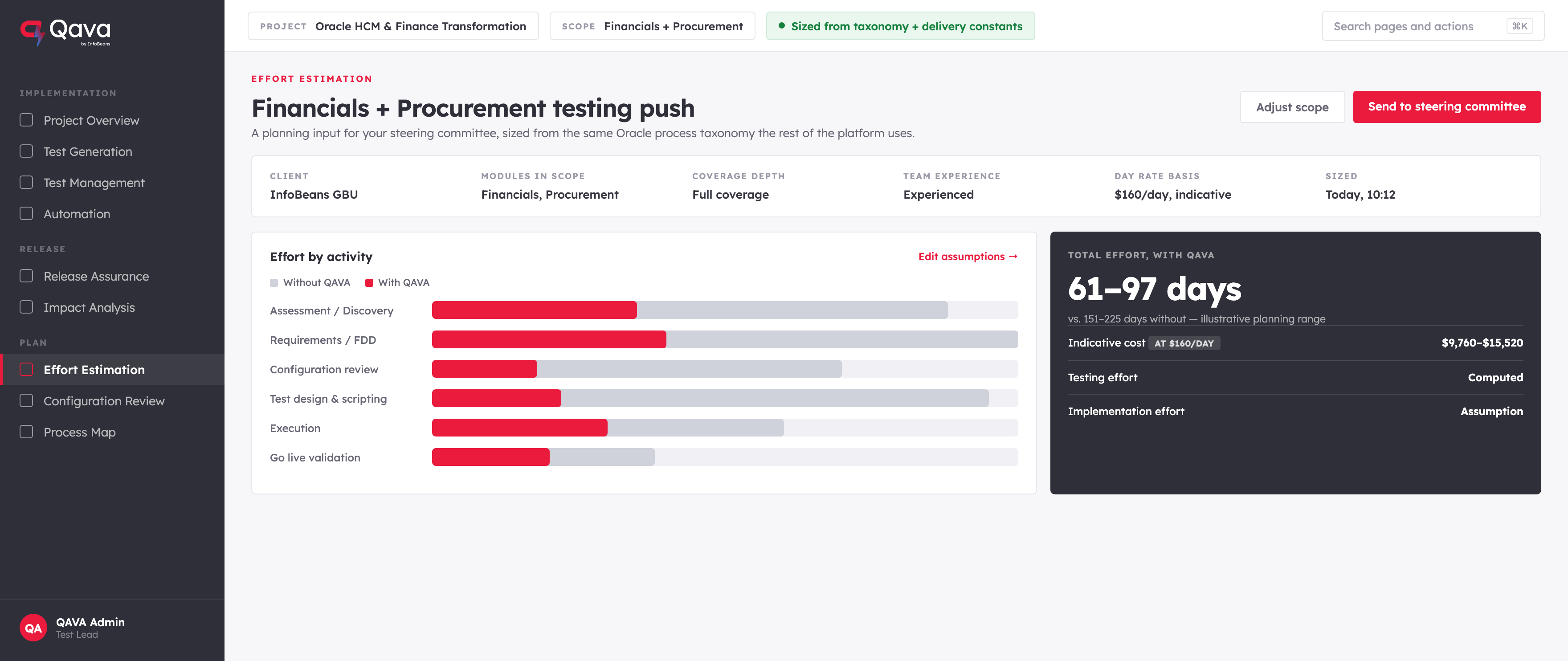
Effort for a testing or configuration push is estimated from the same Oracle process taxonomy the rest of the platform uses, combined with delivery constants tuned from real engagements. A planning input for your steering committee, not a contractual commitment.

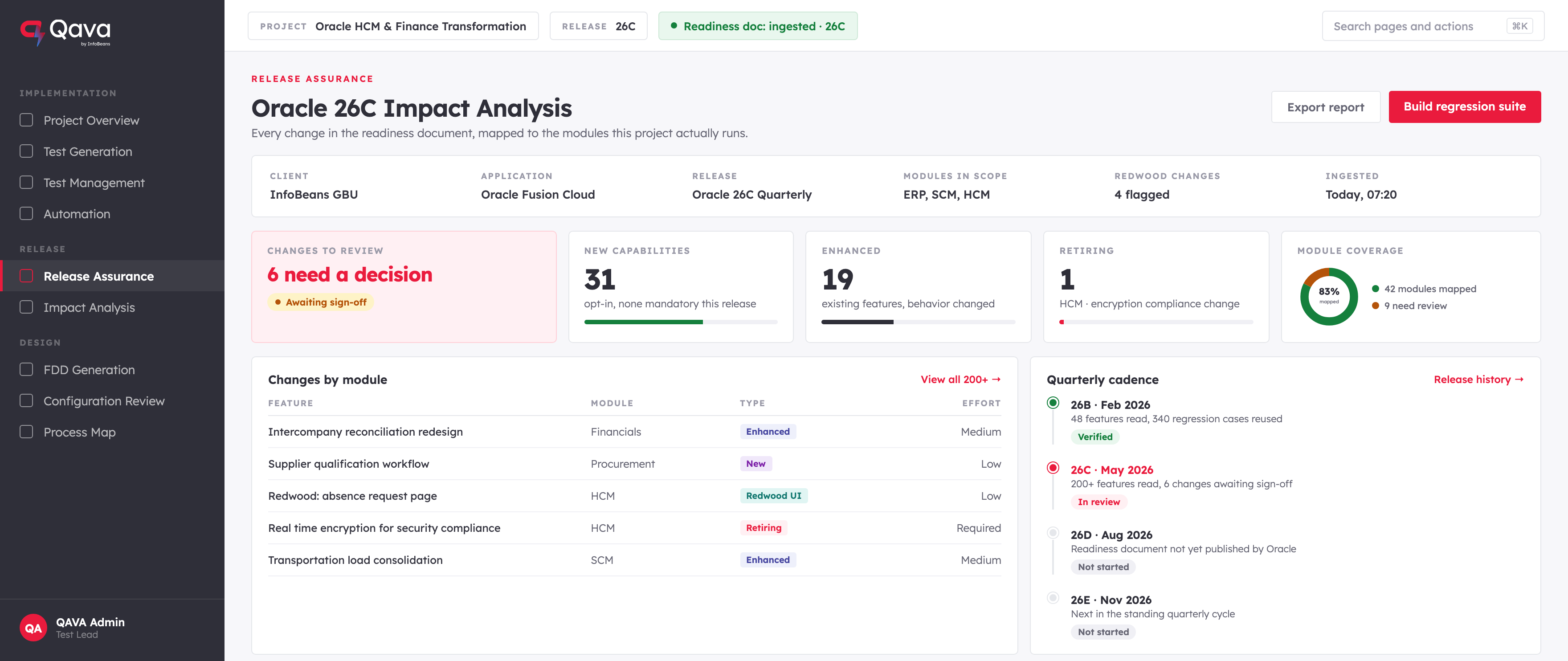
Automated checks keep running against the live system through hypercare, not just at go live. Every quarterly release after that gets read and mapped to the modules you actually run before anyone opens a ticket.

Nine named capabilities, for checking off against whatever else you are evaluating.
The platform was built by the same InfoBeans Oracle practice that runs Fusion implementations. Every automation in the library came out of a real project before it was offered to anyone else.
Not a prototype against sample data. The screens and figures on this site come from our own implementation projects, executing against real Fusion instances in approved test environments.
We would rather run it on your release notes than show you a canned demo. You will see what it flags, what it misses, and where it stops and asks a human.