Seven Oracle Fusion engagements, start to finish

Faster implementations, fewer surprises in testing and Oracle's new AI features adopted sooner. Each one covers the challenge, the work and the result, with arithmetic you can check.

Seven engagements close to your own scope

Different Oracle pillars, different regions, different scale. Open any one for the challenge, the work and the result.
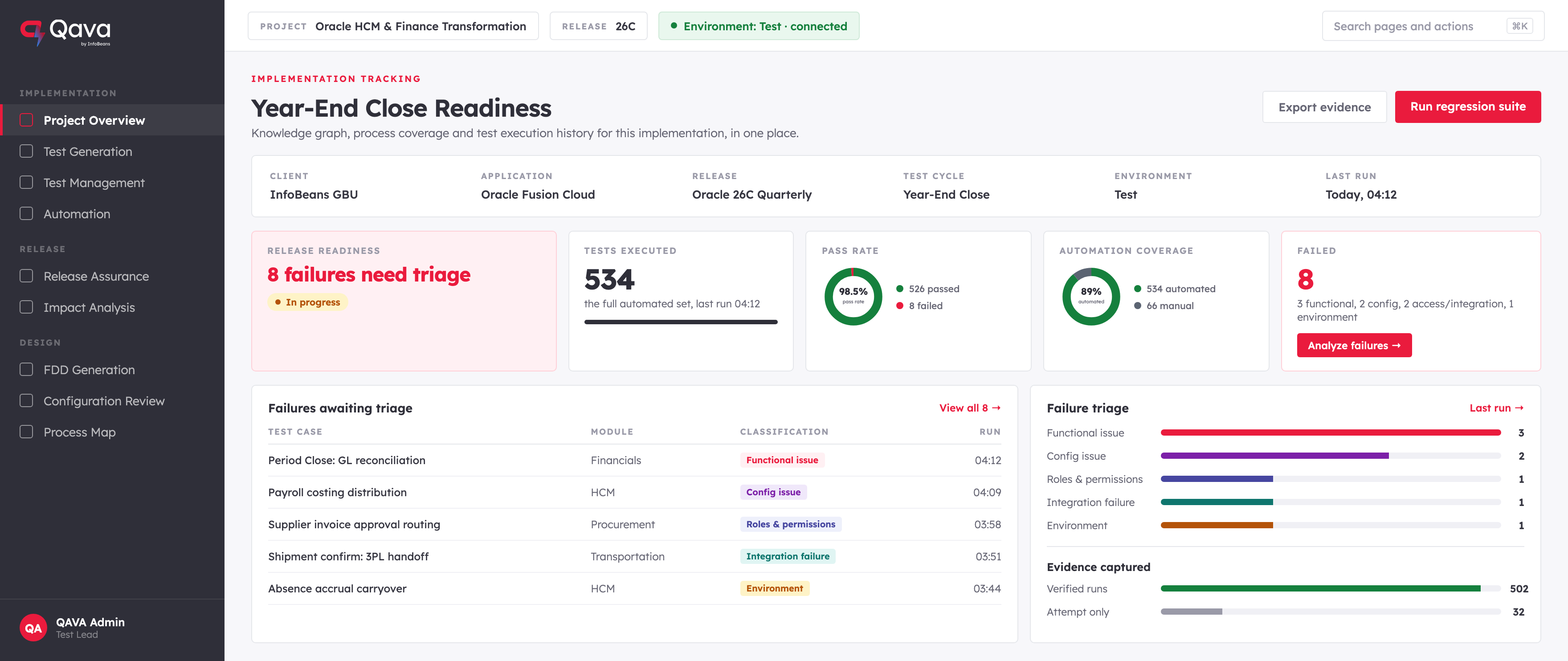
Global multi-wave rollout

How a global enterprise operating in more than 80 countries cut testing on a multi-wave Fusion rollout from $1.4M to about $400K

Oracle Fusion Cloud · Global, 80+ countries · SIT, UAT and go live across every wave
$1.4M → about $400Ktesting cost across the rollout
About $1Msaved across SIT, UAT and go live
Read the case study
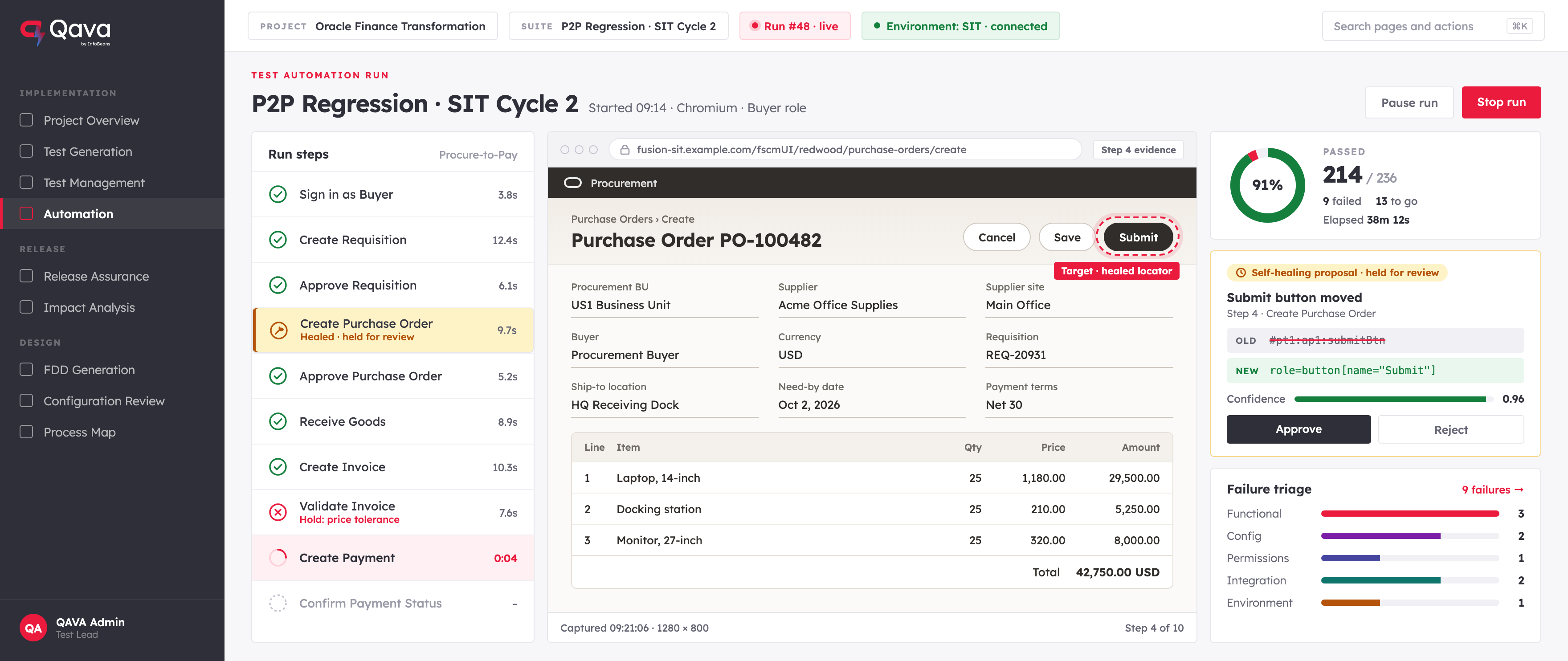
AI assisted implementation

How a consumer goods manufacturer took a three pillar Fusion rollout from 8 months to 5

Oracle Fusion Cloud (Financials, Procurement, Supply Chain) · North America
8 months → 5 monthsrequirements to go live
Read the case study
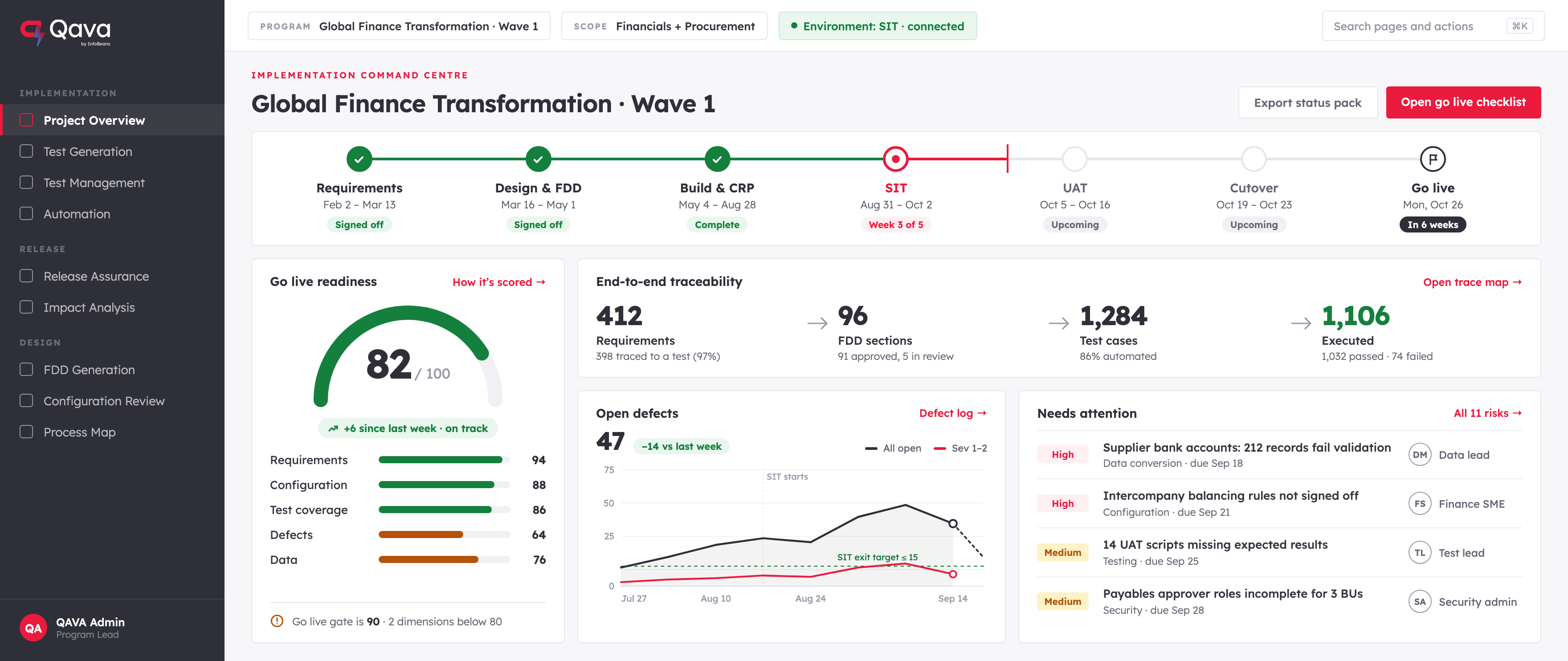
Agentic regression

How agents took over regression for a building products distributor, cut the effort 60% and caught a shipping defect first

Oracle Fusion SCM + Order Management · Europe
60%less regression effort per release
Read the case study
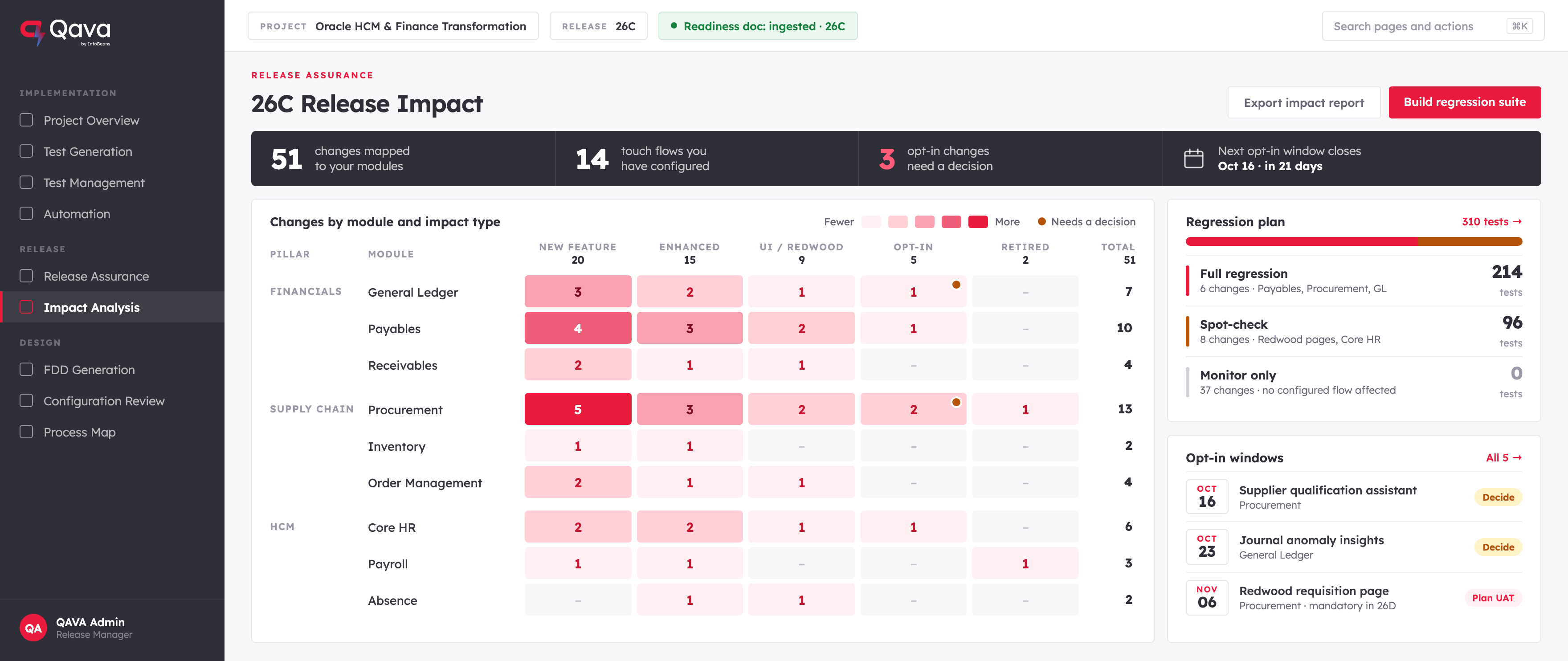
Oracle AI adoption

How a contract manufacturing group now adopts Oracle's new AI features in the quarter they ship

Oracle Fusion SCM, Order Management, Procurement · Two continents (APAC + North America)
3 to 4 months → same quartergap to adopting new Oracle capability
Read the case study
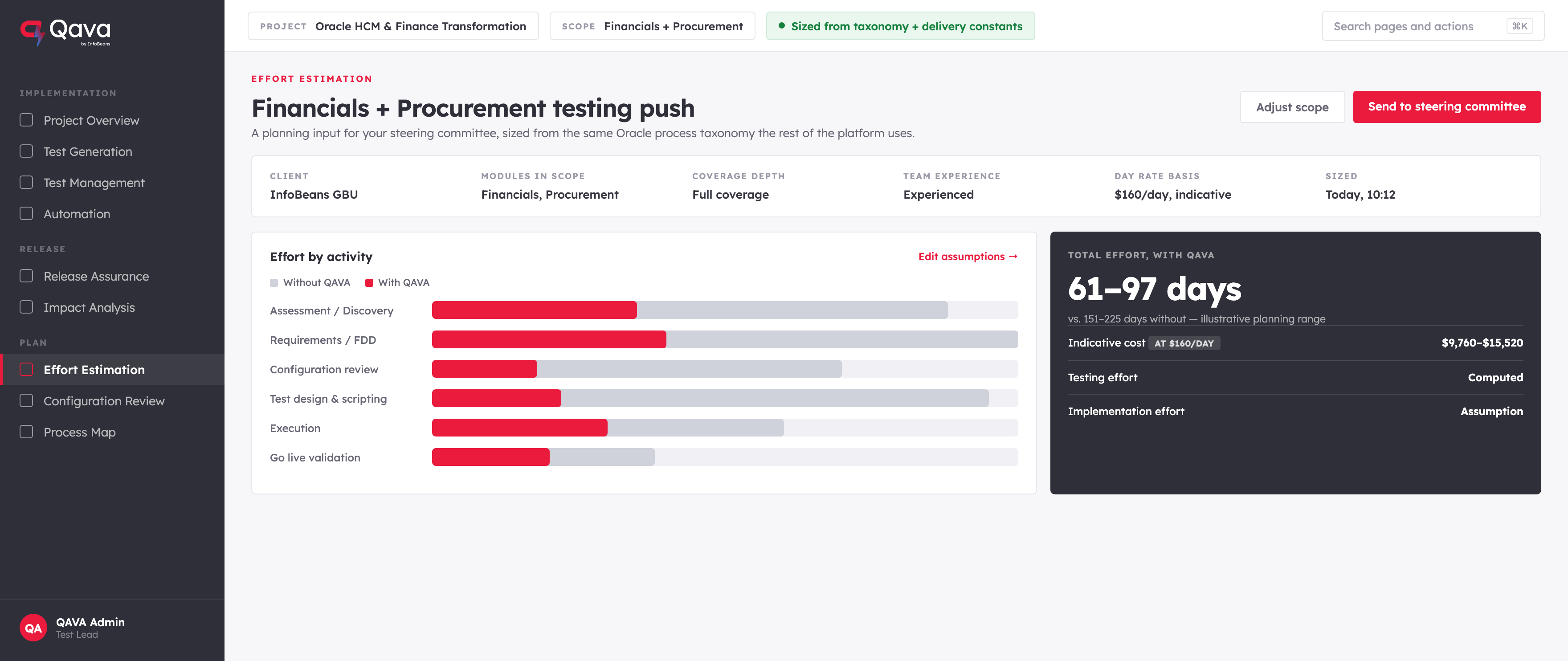
Lower testing cost

How a Fortune 500 industrial parts distributor cut its Fusion testing spend by about $500K a year

Oracle Fusion Cloud
$900K → about $400Kannual Fusion testing spend
Read the case study
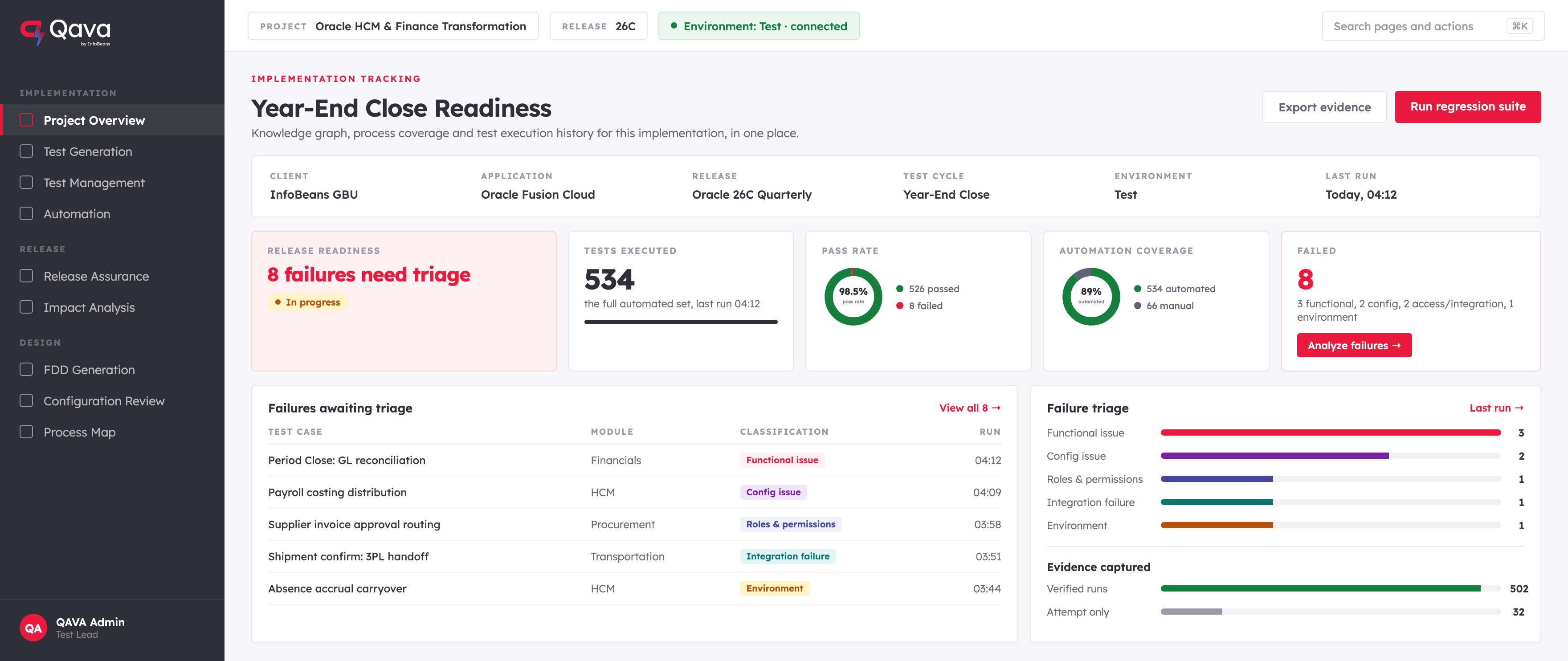
Regression across HCM and ERP

How a BFSI group cut full HCM and ERP regression from 11 weeks to about 4, and kept it there

Oracle Fusion HCM + ERP
11 weeks → about 4full regression cycle
Read the case study
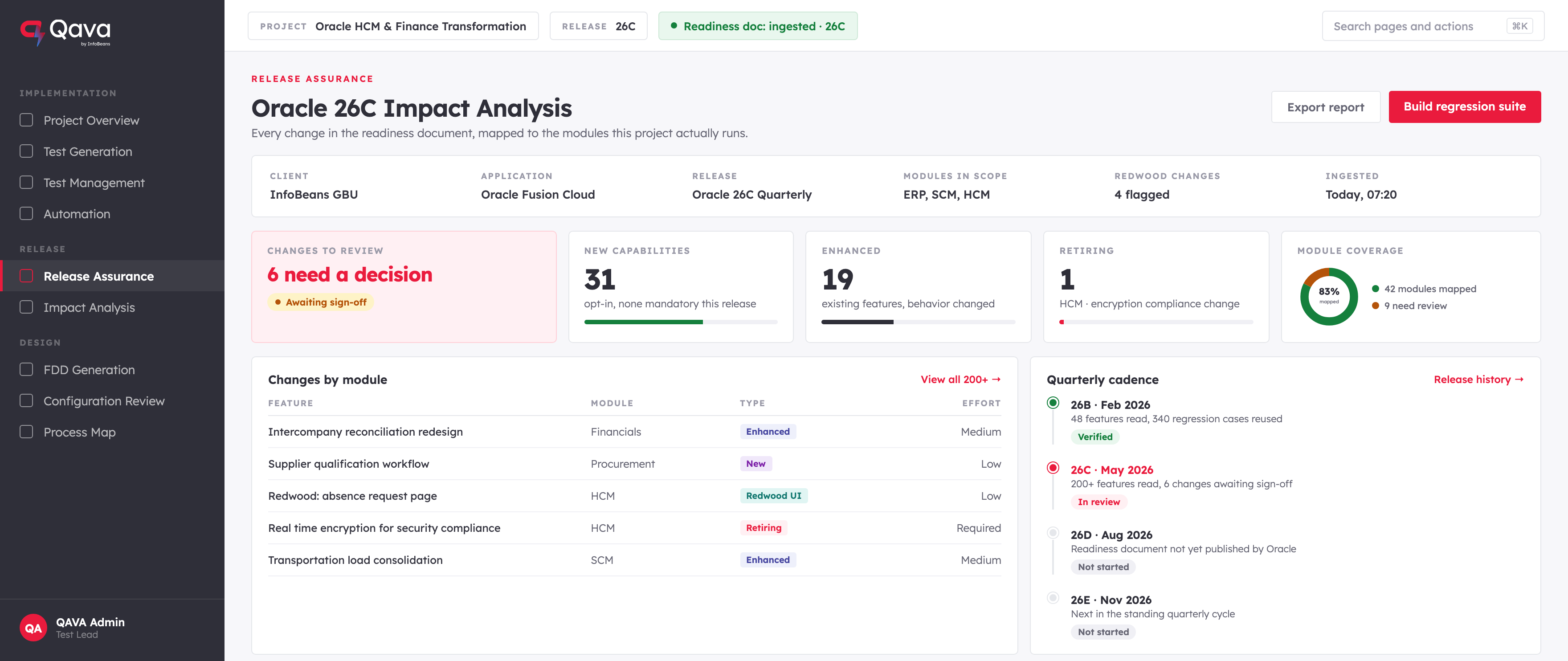
Release impact, known early

How a public sector agency uses generative AI to read each Oracle release before planning starts

Oracle Fusion Financials, Procurement, HCM
Before planningrelease impact known, not after planning has started
Read the case study
Case study AI assisted implementation

How a consumer goods manufacturer took a three pillar Fusion rollout from 8 months to 5

A fixed go live date, three pillars and a testing plan the steering committee already thought was too tight. Here is how the team got there with time to spare.

PlatformOracle Fusion Cloud (Financials, Procurement, Supply Chain)
RegionNorth America
In scope120 integrations · ~90 reports · ~40 extensions
8 months → 5 months
requirements to go live
3 weeks → 4 days
first FDD draft
7 months → under 3
SIT, E2E and UAT combined
120 / 90 / 40
integrations / reports / extensions
Challenge

The go live date was set and wasn't going to move. Every week the functional leads spent drafting FDDs was a week nobody could start writing tests, and the first drafts took about three weeks. Configuration for new business units and legal entities kept throwing up gaps once SIT had already begun, which meant the same people were fixing setup and testing it at the same time. Testing alone was budgeted at seven months, and the steering committee had already said out loud that it looked tight.

Solution

We started all three workstreams from the same requirements and the same Oracle process list, so nobody was waiting on anybody else's spreadsheet. The first FDD draft reached the functional leads in four days, and their job became reviewing and correcting it instead of writing it. New business unit and legal entity setup was checked before SIT, not during it. Test coverage for SIT, E2E and UAT came from that same baseline, so each phase opened with its scope already agreed.

What it caught
Reviewing a new legal entity's setup turned up a tax registration setting that didn't match its country. Nobody had to find it the hard way, days into SIT, as a transaction that wouldn't post.
Result

Requirements to go live took five months instead of eight, and combined testing took under three months against the seven budgeted. The go live date held, and for once the program went into cutover with time in hand rather than borrowed.

Our scope included Financials, 120 integrations, nearly 40 extensions and about 90 reports. We had budgeted seven months for combined testing. We finished in under three. That was a big difference for the program.
IT Program DirectorLeading consumer goods manufacturer, Fusion ERP rollout
Case study Agentic regression

How agents took over regression for a building products distributor, cut the effort 60% and caught a shipping defect first

Every release used to mean ten weeks of the same manual regression. Now it runs overnight, and it found a problem a person walking through screens would most likely have missed.

PlatformOracle Fusion SCM + Order Management
RegionEurope
In scope70 integrations · ~55 reports · ~35 extensions
60%
less regression effort per release
10 weeks → under 4
regression cycle
Weeks earlier
than the defect would otherwise have surfaced
100%
in scope coverage held, not traded for speed
Challenge

Every quarterly release, the same team walked through the same Supply Chain and Order Management scenarios by hand, and it took close to ten weeks. By the time they finished, the next release was already on its way. The problems that worried them most were the quiet ones, like a status that changes with no document behind it, because nothing in a manual walkthrough makes you stop and look.

Solution

Regression now runs overnight from a script library the team builds on release after release, instead of starting again each time. When a screen changes and a step can't find what it expects, a fix is proposed and waits for someone to approve it, so nobody spends the morning chasing a broken run. Real failures arrive already sorted by cause, so the team's time goes on the few things that need a person.

What it caught
One overnight run flagged an order that had moved to Shipped with no bill of lading ever created. Normally nobody would notice until a customer or an auditor asked for the document weeks later. It was traced to an integration issue and fixed before the release went out.
Result

The regression cycle went from close to ten weeks to under four, and the team still tests everything in scope. What changed most for them was getting their weeks back.

Our regression cycle used to take close to 10 weeks. It is now under four. We are also finding issues earlier, including problems in business processes that would have been difficult to catch later.
QA DirectorLeading building products distributor, Fusion SCM and Order Management
Case study Oracle AI adoption

How a contract manufacturing group now adopts Oracle's new AI features in the quarter they ship

They run the same Oracle stack as their largest competitor, and they kept watching that competitor use new features months earlier. Now they adopt them in the quarter they ship.

PlatformOracle Fusion SCM, Order Management, Procurement
RegionTwo continents (APAC + North America)
In scope80 integrations · ~65 reports · ~55 extensions
3 to 4 months → same quarter
gap to adopting new Oracle capability
3 days
to turn Oracle's readiness doc into a mapped impact plan
80 / 65 / 55
integrations / reports / extensions
0
releases reaching users unverified
Challenge

Someone had to read Oracle's quarterly readiness document and work out what it meant for them, on top of running the business across two continents. It was nobody's full time job, so it always came last. New capability, including Oracle's own AI features, reached them three to four months after their biggest competitor on the same Oracle stack was already using it. It wasn't a technology gap, just a time gap.

Solution

Each quarterly release is now read in full and mapped to the modules they actually run, usually within three days of Oracle publishing it. The team starts the quarter knowing what changed and what to test. Their existing regression suite is reused rather than rewritten, so trying a new feature takes a few days instead of turning into a project of its own.

What it caught
A Supply Chain Planning AI feature from a recent quarterly update was evaluated and switched on in the same quarter it shipped, instead of joining a queue of three to four months.
Result

The gap to their largest competitor went from three to four months to the same quarter a feature ships. The team now goes into each release knowing what is coming, not finding out halfway through.

We used to be three to four months behind when adopting new Procurement and Supply Chain capabilities. Now we can assess and test them in the same quarter they are released. That has made a real difference to the business.
VP, ProcurementLeading contract manufacturing group, Fusion SCM across two continents
Case study Lower testing cost

How a Fortune 500 industrial parts distributor cut its Fusion testing spend by about $500K a year

Their CFO could see that testing cost a lot, but not where the money went. Now it costs less than half as much, and every hour can be accounted for.

PlatformOracle Fusion Cloud
In scopeRecurring Fusion regression and release testing
$900K → about $400K
annual Fusion testing spend
About $500K
saved every year
~55%
lower testing cost
By module
where the testing effort now goes, release by release
Challenge

Fusion testing cost close to $900,000 a year, mostly people repeating the same regression by hand every quarterly release. In the budget it was a single line. When the finance team asked which modules or releases were driving it, nobody could say, so there was no safe way to spend less without taking on risk.

Solution

Regression moved onto a reusable script library that runs on its own, so each release builds on the last one's work instead of repeating it. Every run is recorded against the module and the release it covers. For the first time, the finance team could open a report and see where the testing effort actually goes.

Result

Annual testing spend dropped from close to $900,000 to about $400,000, a saving of about $500,000 a year. Just as important to the CFO, the remaining spend can now be explained line by line.

We were spending close to $900,000 a year on Fusion testing. That is down by about $500,000, and we have far better visibility now into where the effort actually goes.
Chief Financial OfficerFortune 500 industrial parts distributor
Case study Regression across HCM and ERP

How a BFSI group cut full HCM and ERP regression from 11 weeks to about 4, and kept it there

For a regulated financial group, testing everything is not optional. The question was how to do it without it taking most of every quarter.

PlatformOracle Fusion HCM + ERP
In scopeFull regression across HCM and ERP
11 weeks → about 4
full regression cycle
~64%
shorter regression
Held
in the quarterly releases that followed
HCM + ERP
covered by one regression suite
Challenge

Full regression across HCM and ERP took close to eleven weeks. For a group that answers to regulators, cutting corners on testing wasn't an option, so every quarterly release became a squeeze. The QA team kept being asked to choose between testing everything and staying on the release calendar, and neither answer was a good one.

Solution

HCM and ERP regression was built once, as one suite that runs on its own, instead of being planned and walked through by hand every cycle. When a screen changed and a step couldn't find what it expected, a fix was proposed and held until someone on the team approved it. Nothing changed without a person agreeing to it.

Result

Full regression now takes about four weeks instead of close to eleven, and it has stayed that way in every release since. The team no longer has to pick between thorough and on time.

Testing was one of the biggest workstreams in our Fusion HCM and ERP program. Our full regression used to take close to 11 weeks. We now complete it in about four weeks, and we have seen the same improvement in the releases that followed.
Head of QALeading BFSI group
Case study Release impact, known early

How a public sector agency uses generative AI to read each Oracle release before planning starts

They used to find out how big a release really was once the plan was already agreed. Now they know before the planning meeting.

PlatformOracle Fusion Financials, Procurement, HCM
In scopeQuarterly release validation across three pillars
Before planning
release impact known, not after planning has started
70%
faster release validation
3 pillars
Financials, Procurement and HCM mapped every release
Challenge

Each quarterly release was reviewed by hand. By the time the team understood what had changed across Financials, Procurement and HCM, release planning had usually started, so the real amount of testing only became clear after dates had been promised. For a public agency with fixed budgets and busy teams, that meant a lot of awkward conversations about scope.

Solution

Every quarterly release is now read and mapped to the modules the agency actually runs as soon as Oracle publishes it. The result is a plain list of what changed and what needs testing, ready before anyone sits down to plan.

Result

Release validation is about 70% faster, and the team goes into planning already knowing what changed and how much testing it will take. The plan they agree is one they can actually keep.

Before a release, we now know much earlier what has changed across Financials, Procurement and HCM and what we need to test. Earlier, we often found out how much work was involved only after the release planning had started.
Director of ApplicationsPublic sector agency
Case study Global multi-wave rollout

How a global enterprise operating in more than 80 countries cut testing on a multi-wave Fusion rollout from $1.4M to about $400K

The rollout was planned in waves, country by country, and every wave was budgeted to repeat SIT, UAT and go live testing from scratch. Testing ended up costing about $1 million less than planned.

PlatformOracle Fusion Cloud
RegionGlobal, operations in more than 80 countries
In scopeMulti-wave rollout · SIT, UAT, go live readiness and hypercare
$1.4M → about $400K
testing cost across the rollout
About $1M
saved across SIT, UAT and go live
~71%
lower testing cost than budgeted
80+ countries
tested from one reusable library
Challenge

The program was a global template rolled out in waves, region by region, across more than 80 countries. On paper each wave was a smaller copy of the first, but the testing plan treated every one as new: fresh scripts, fresh test data, another full round of SIT, and local business users pulled away for weeks of UAT. Each country also brought its own tax, statutory reporting and language requirements on top of the global design. Testing was budgeted at about $1.4 million across the rollout, and most of that money was set aside to repeat work an earlier wave had already done.

Solution

Testing was built once, around the global template, and then extended wave by wave instead of rebuilt. Business processes shared by every country were scripted up front from the global design, and each wave added only what was local to it, such as tax, statutory reports and approval rules. SIT ran unattended overnight across the countries in each wave. UAT started with business users reviewing results and exceptions rather than walking every script by hand. Before each cutover the same library re-ran go live readiness checks against the new countries' setup, and it stayed on through hypercare.

What it caught
An Oracle quarterly update landed between two waves and changed a screen used in every country's approval flow. The overnight run flagged the affected steps the next morning, a fix was proposed and approved by the test lead, and the next wave's UAT started on its planned date instead of waiting for scripts to be reworked.
Result

Testing across the rollout cost about $400,000 against the $1.4 million budgeted, a saving of about $1 million across SIT, UAT and go live. Each wave cost less to test than the one before it, because it started from the library the earlier waves had built, and every country kept the same coverage instead of having it trimmed to stay on budget.

We budgeted about $1.4 million to test a rollout across more than 80 countries, wave by wave. We spent about $400,000. Every new wave started from what the last one had already built, so we stopped paying to test the same processes twice.
Global Program DirectorGlobal enterprise with operations in more than 80 countries, multi-wave Fusion rollout
Built on delivery work, not a lab

The platform was built by the same InfoBeans Oracle practice that runs Fusion implementations. Every automation in the library came out of a real project before it was offered to anyone else.

Running against live Fusion environments

Not a prototype against sample data. The screens and figures on this site come from our own implementation projects, executing against real Fusion instances in approved test environments.

Judge it on your own release

We would rather run it on your release notes than show you a canned demo. You will see what it flags, what it misses, and where it stops and asks a human.

Nothing runs against production, and a human signs off in four places.

We never use your data to train a model, and once a project is created its data stays inside it. Execution is scoped to a test environment you approve explicitly.

Tell us your scope, we'll tell you which profile fits
Send your module list, integration count and region. We will tell you honestly which of these is closest to your situation and where it differs.
Compare against your scope