The same FDD, a review cycle instead of a drafting cycle
A design document either starts as a blank page and gets filled in by hand, or it starts as a structured first draft that already cites the requirements it came from.
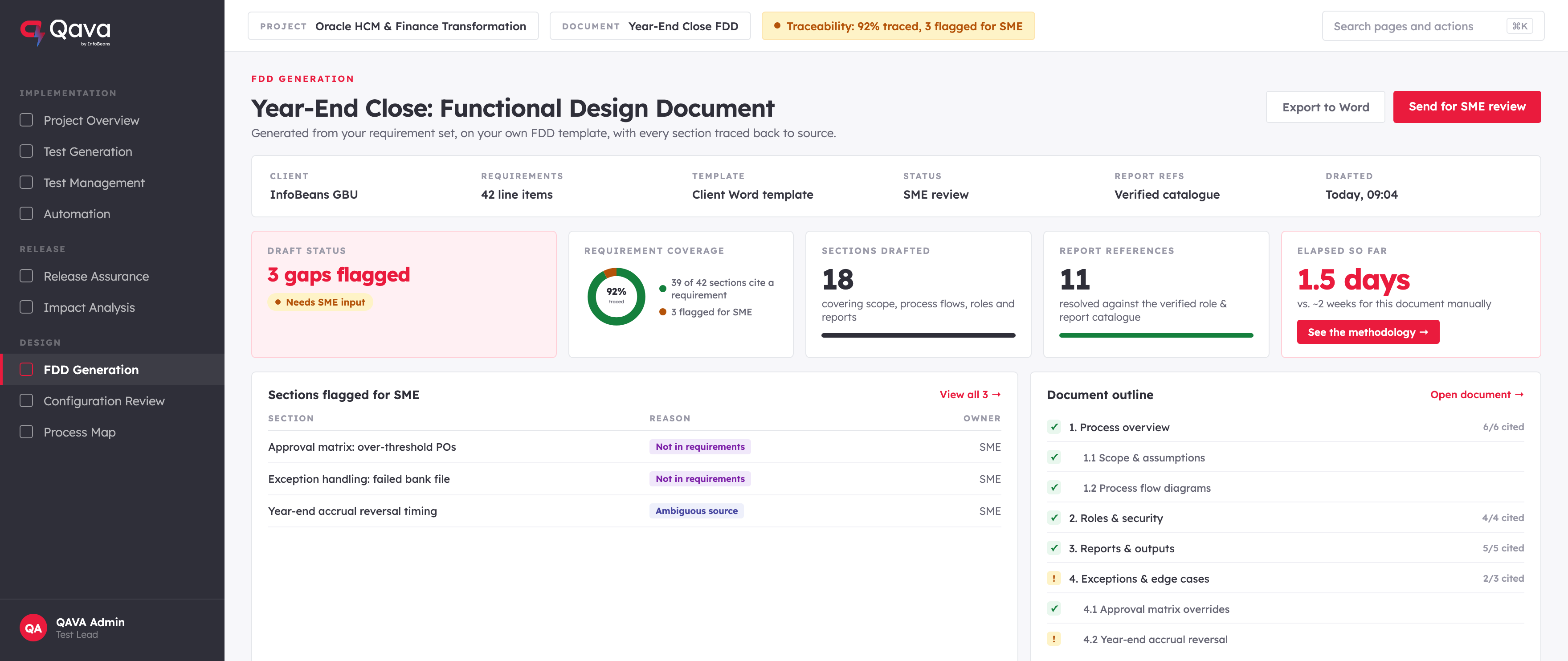
A design document either starts as a blank page and gets filled in by hand, or it starts as a structured first draft that already cites the requirements it came from.
The same view of named capabilities as the other offerings, so the pages compare like for like.
The difference is not that a document appears faster. It is where your SME enters the process. Reviewing a structured draft that already cites its requirements is a different job from writing one from a blank page, and it is the job SMEs are actually scarce for.
Output formats are Word, Excel and PDF, on your own templates. Role and report references are resolved against a verified catalogue rather than generated, so the document does not cite an Oracle report that does not exist.
The platform was built by the same InfoBeans Oracle practice that runs Fusion implementations. Every automation in the library came out of a real project before it was offered to anyone else.
Not a prototype against sample data. The screens and figures on this site come from our own implementation projects, executing against real Fusion instances in approved test environments.
We would rather run it on your release notes than show you a canned demo. You will see what it flags, what it misses, and where it stops and asks a human.